Why format matters so much
Two products with the same ingredients can perform very differently depending on their format. The right choice comes down to three questions:
- How much ingredient per serving? A few milligrams fit in a capsule; several grams call for a powder.
- Who is your customer? An athlete is happy with a shaker; others prefer a discreet capsule or an easy-to-take liquid.
- Where will it be sold? In a pharmacy, a gym or online, packaging expectations differ.
Capsules: the all-rounder
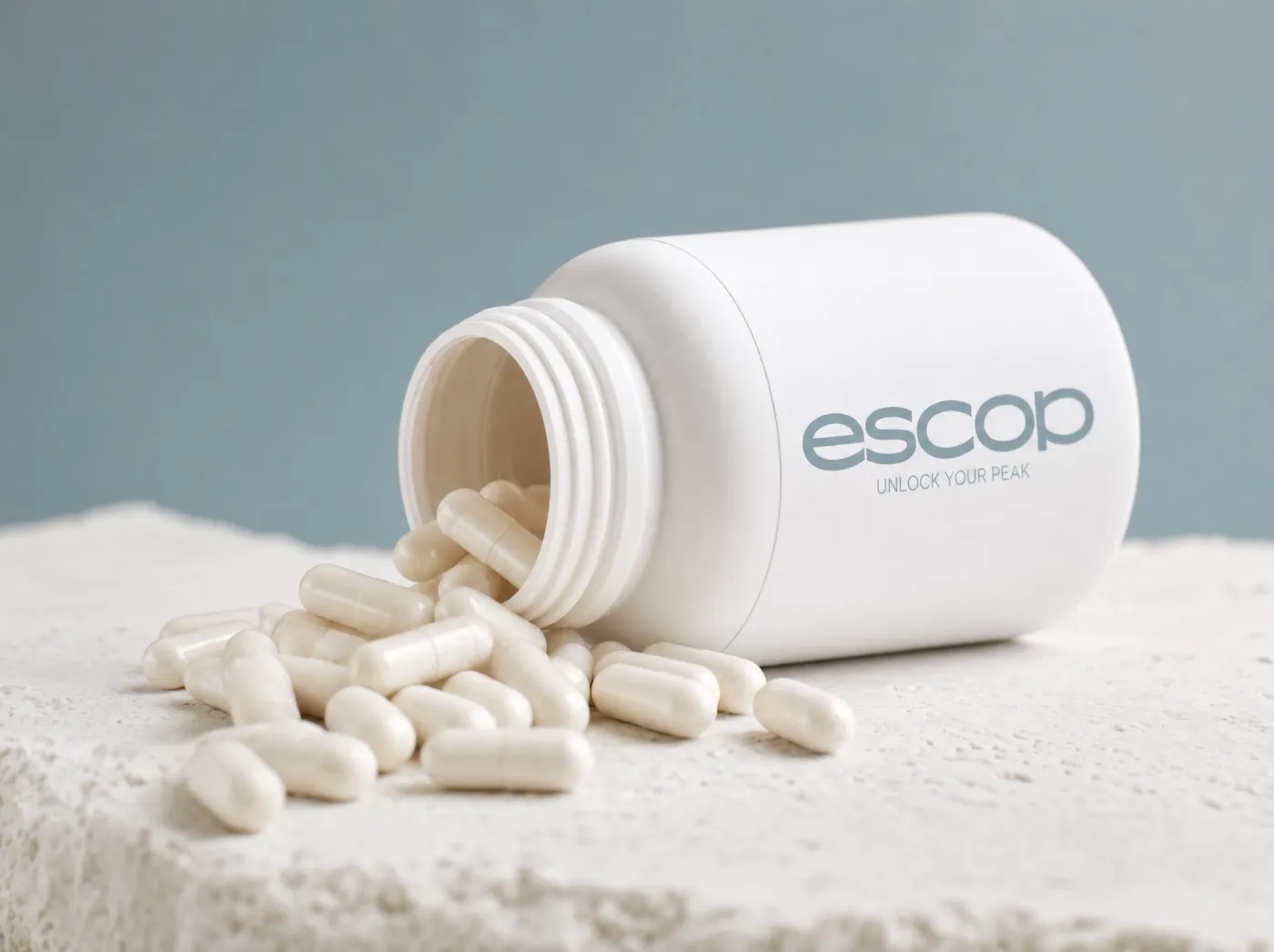
This is the most common format, and often the simplest way to start.
- Strengths: precise dosing, good stability, no taste, easy to carry.
- Shell options: vegetable capsules (HPMC), suitable for vegetarian customers, or gelatin capsules.
- Ideal for: vitamins, minerals, plant extracts (ashwagandha, turmeric, maca…).
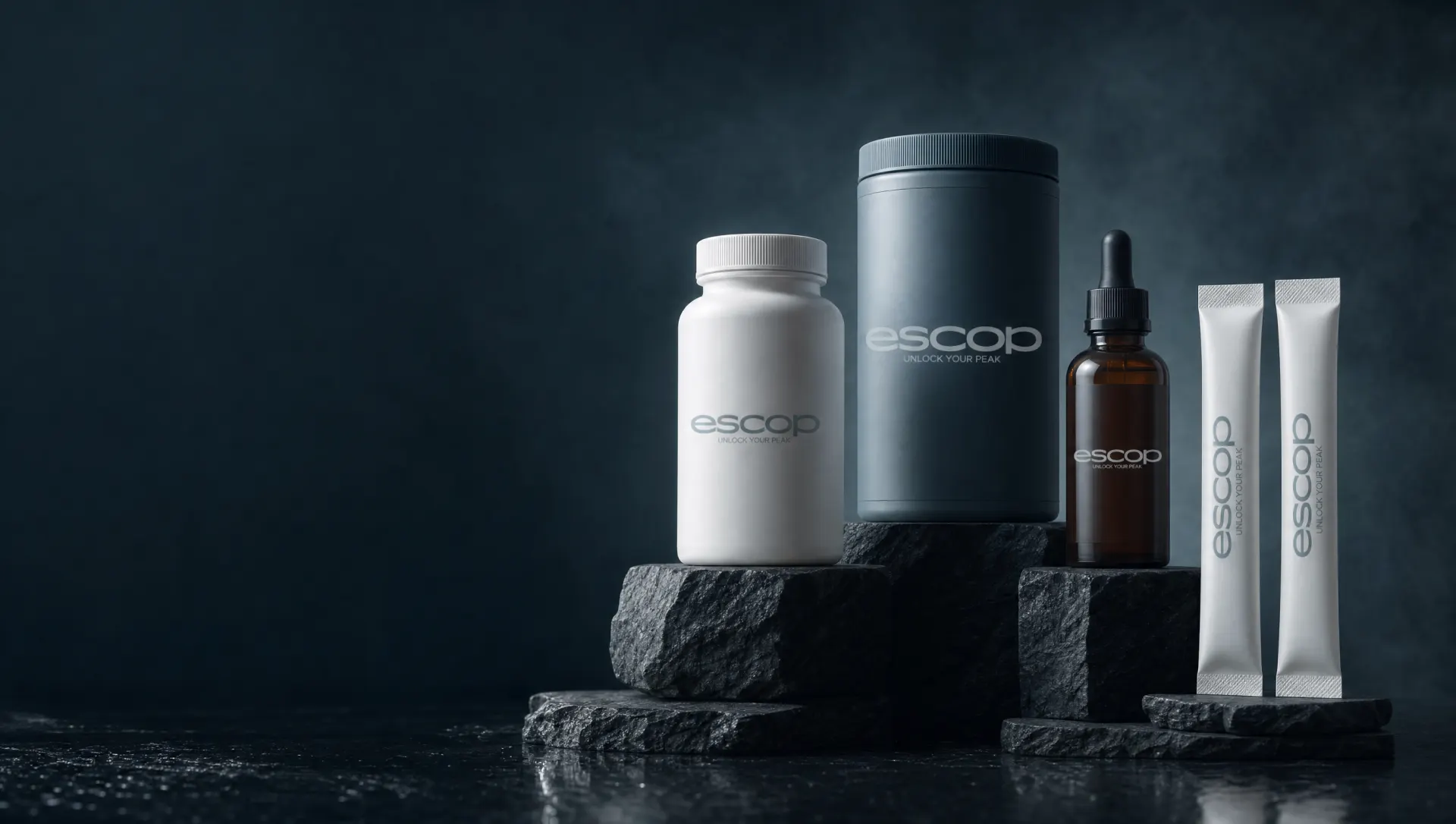
- Packaging: pill bottles, bottles, blisters.
For oily ingredients such as omega-3 or vitamin D3 + K2, we use softgels — available in Halal bovine gelatin, an important point for Gulf markets.
Powders: for high dosages
- Strengths: several grams per serving, flavours possible, excellent quantity-to-price ratio.
- Ideal for: sports products (protein, creatine), collagen, functional drinks.
- Packaging: tubs, pouches, single-serve stick packs.
- Watch out for: taste and solubility need work — a good flavour makes loyal customers.
Liquids: syrups and drops
- Strengths: easy to take for people who dislike swallowing capsules, pleasant taste, adjustable dosage.
- Ideal for: family formulas, concentrated drops.
- Packaging: bottles and droppers.
- Watch out for: once opened, a liquid keeps for less time than a capsule.
Tablets, gummies and other formats
Gummies appeal because they feel like a treat, tablets because they are compact. These formats need a case-by-case study depending on the ingredients and dosages you are aiming for.
The comparison at a glance
| Format | Dose per serving | Ideal for | Packaging |
|---|---|---|---|
| Capsules | Low to medium | Vitamins, minerals, plants | Pill bottles, bottles, blisters |
| Softgels | Low to medium (oils) | Omega-3, vitamin D3 + K2 | Pill bottles, bottles |
| Powders | High (several grams) | Sport, collagen, drinks | Tubs, pouches, stick packs |
| Liquids | Adjustable | Syrups, drops | Bottles, droppers |
| Gummies, tablets | Low | Treat-style or compact formats | Subject to a feasibility study |
Have a project in mind?
Ready formulas from 100 units, production from 5 days.
Reply within 2 hours· during business hoursHow to decide
Start from the use: how much ingredient is needed per day, and how does your customer prefer to take it? If you are unsure, capsules are the safest choice for a first product: they suit most formulas and can be launched from 100 units with our ready formulas.
To go further, read our 7-step guide to launching your brand, or download our catalogue to see the 48 formulas available.
Frequently asked questions
What is the difference between a capsule and a softgel?
A capsule is a hard shell filled with powder; a softgel is a soft shell that contains a liquid or an oil, such as omega-3.
Are vegetable capsules suitable for vegetarians?
Yes, HPMC vegetable capsules contain no animal gelatin.
Which format should I choose for a first product?
Capsules are often the simplest choice: precise dosing, good stability, and a launch from 100 units with a ready formula.